Distilling Lightness and Weight: The Farnsworth House
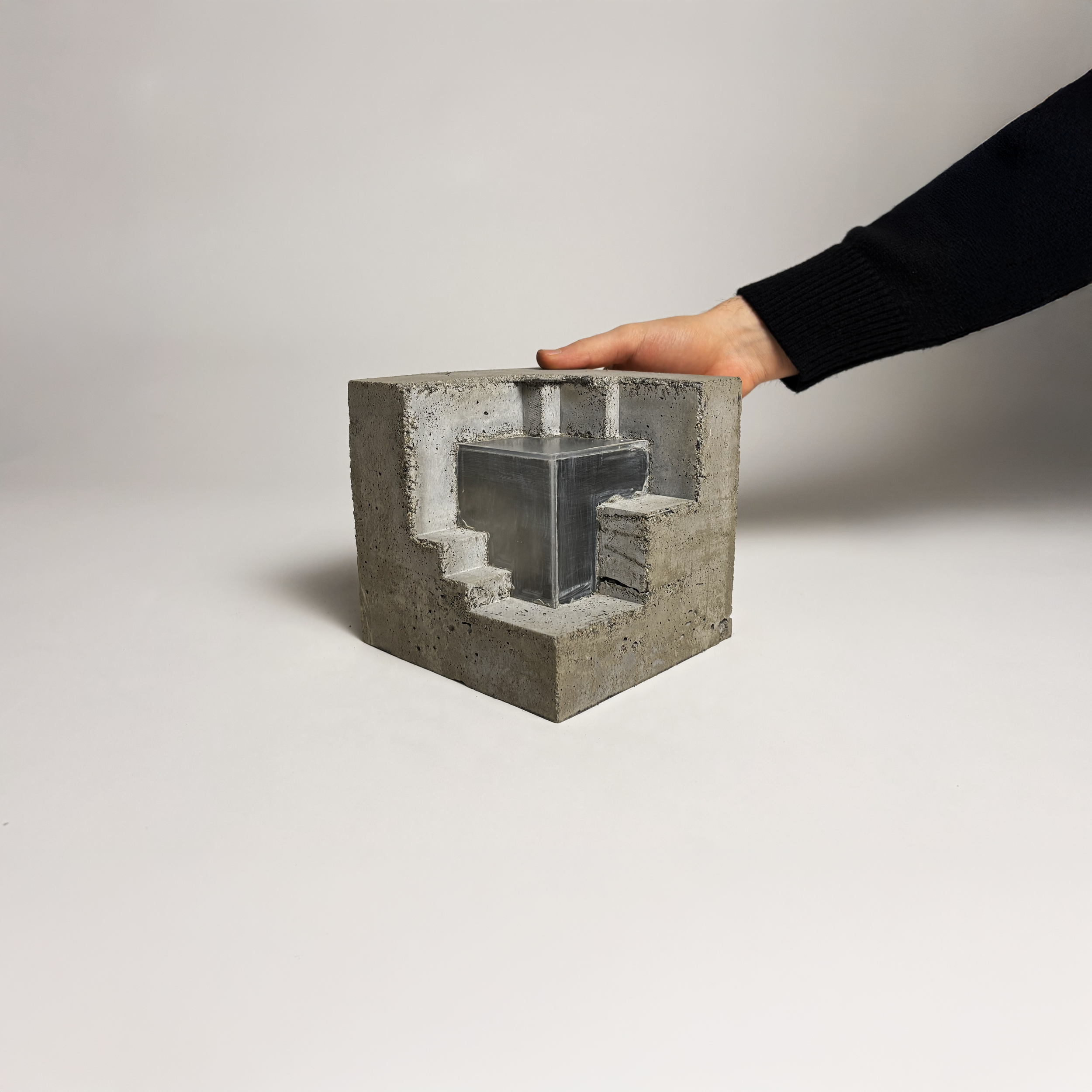
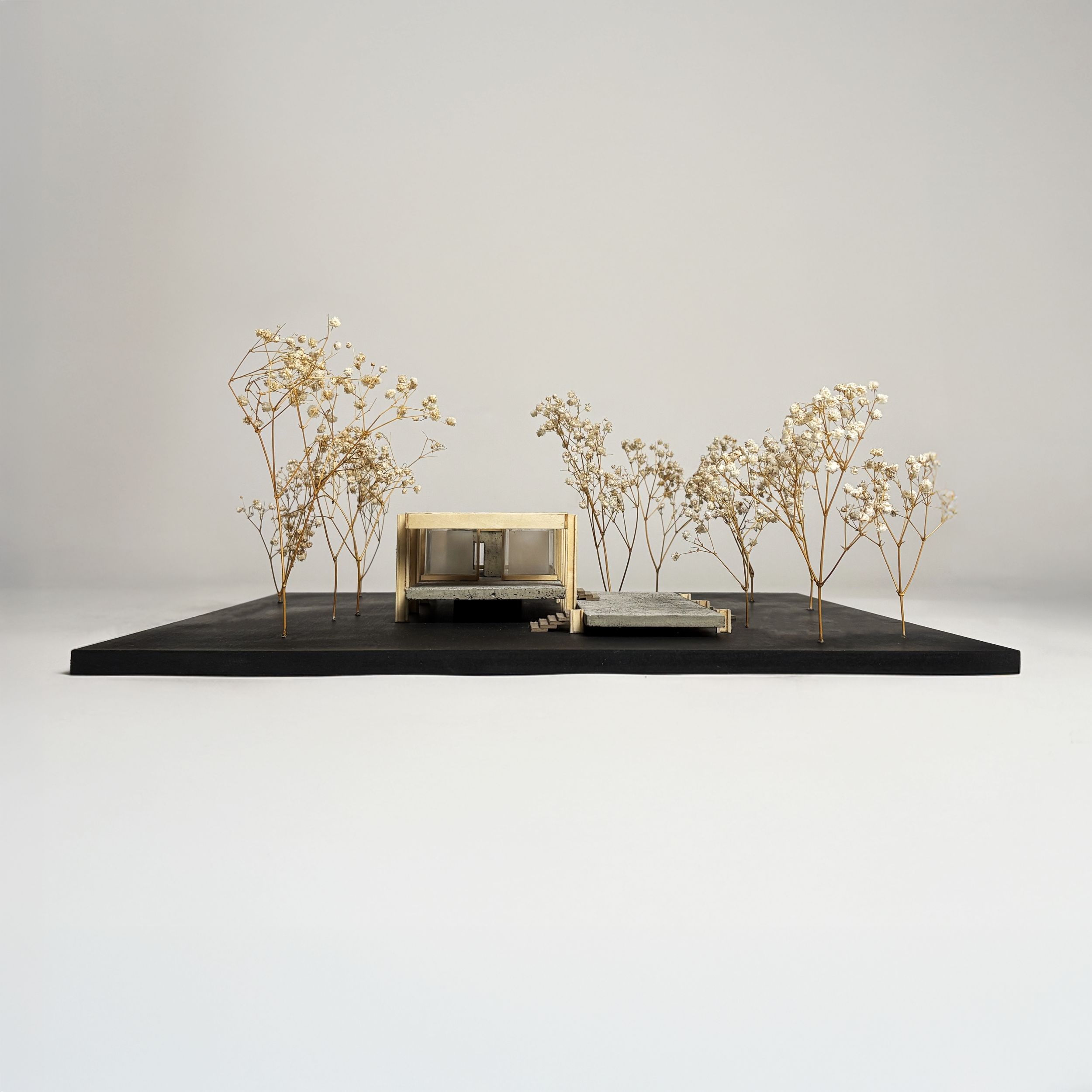
This project abstracts the Farnsworth House to examine how architectural space can be organized through conditions of weight and lightness rather than enclosure. Public and private realms are reinterpreted as opposing material states, where transparency, elevation, and structural exposure signify openness, while mass, grounding, and density communicate protection and privacy. Through reductive model making, the work positions material and form as analytical tools, using abstraction to reveal the underlying spatial logic that governs the house rather than its literal configuration.
Workflow
physical fabrication
Year
2025
01 - Architectural Abstraction Model
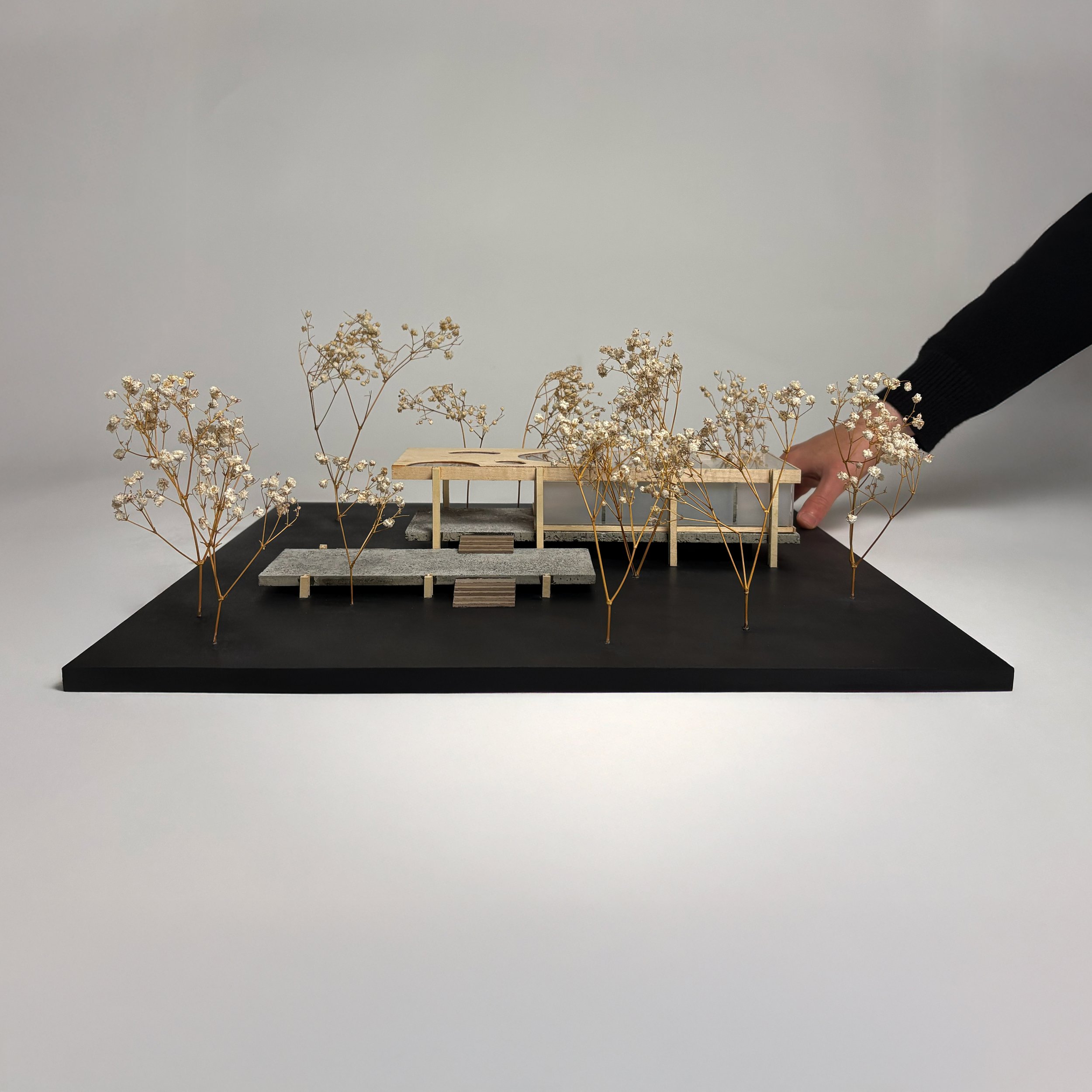
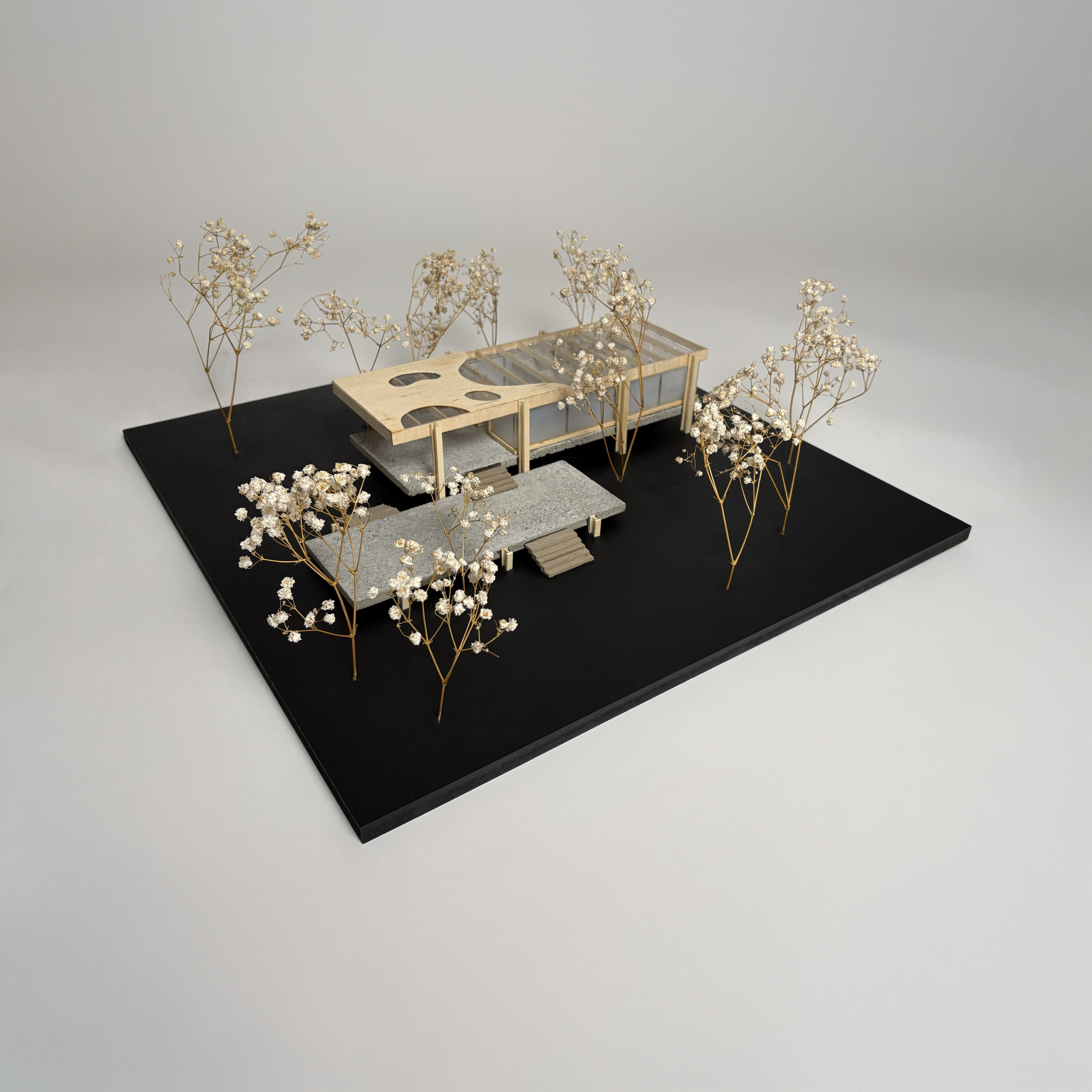
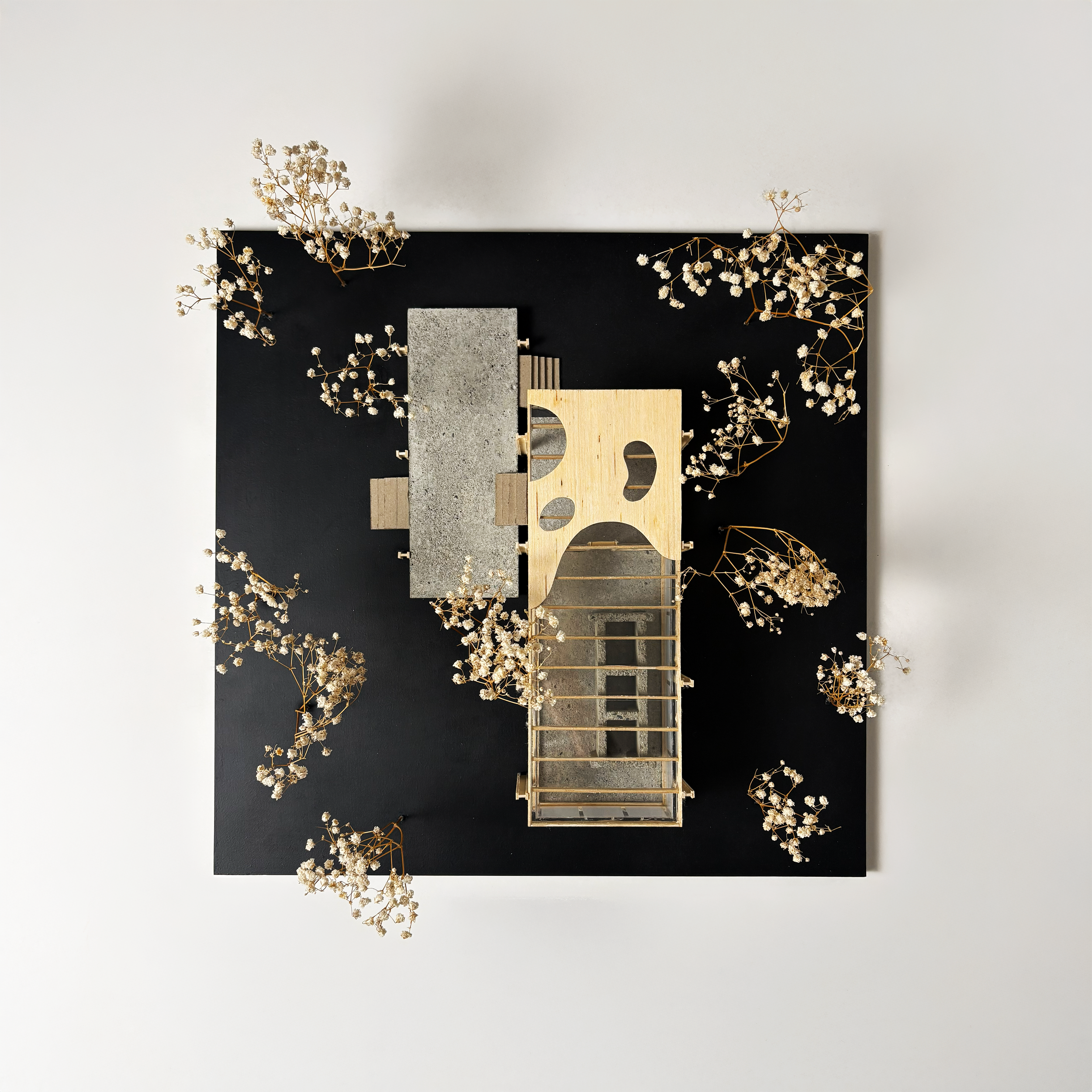
This 1:75 model interprets the Farnsworth House through material contrast and spatial hierarchy rather than literal form. Light, elevated elements express openness and public occupation, while heavier, grounded components signify privacy and protection. The exposed roof structure emphasizes how lightness is constructed and supported, framing openness as an intentional architectural condition.
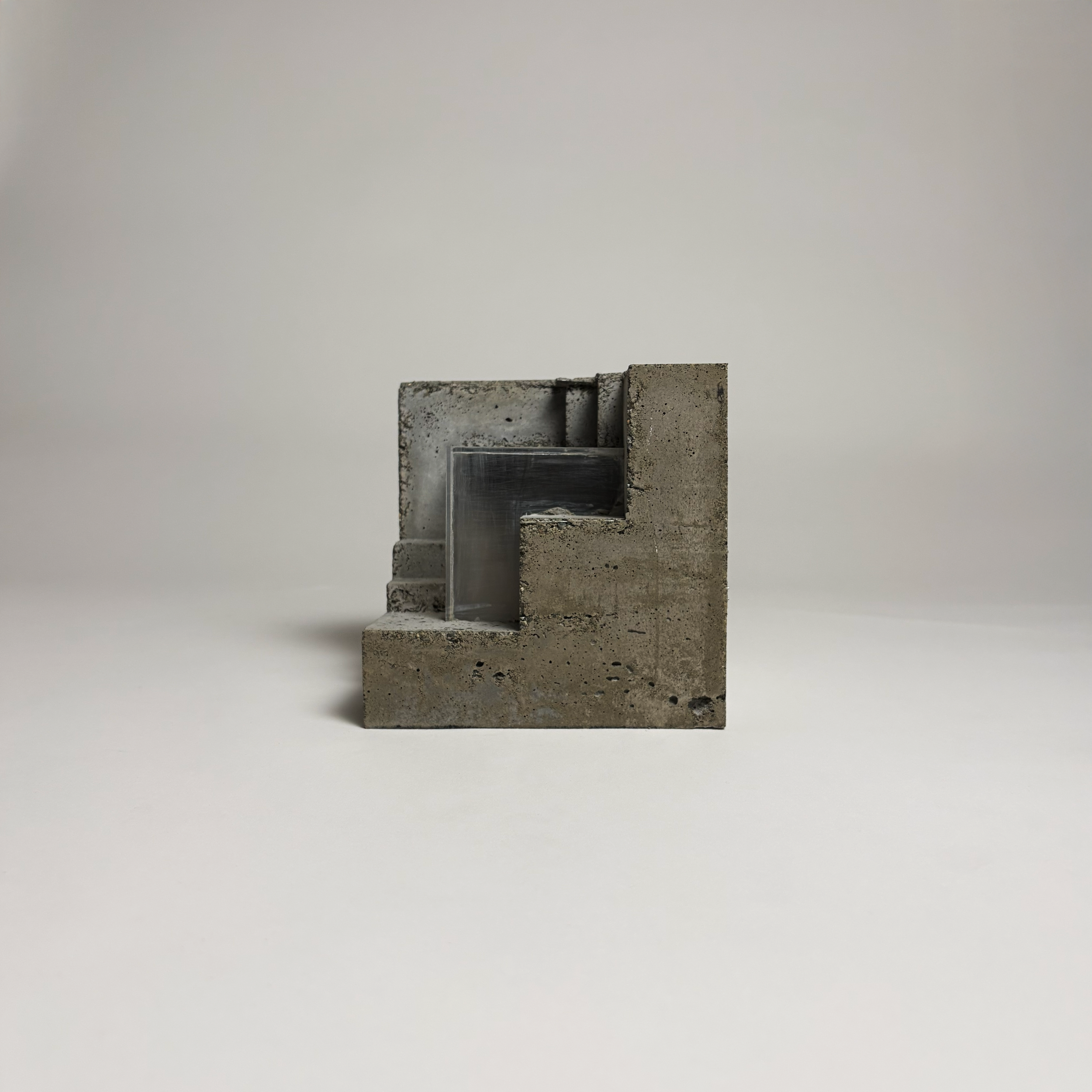
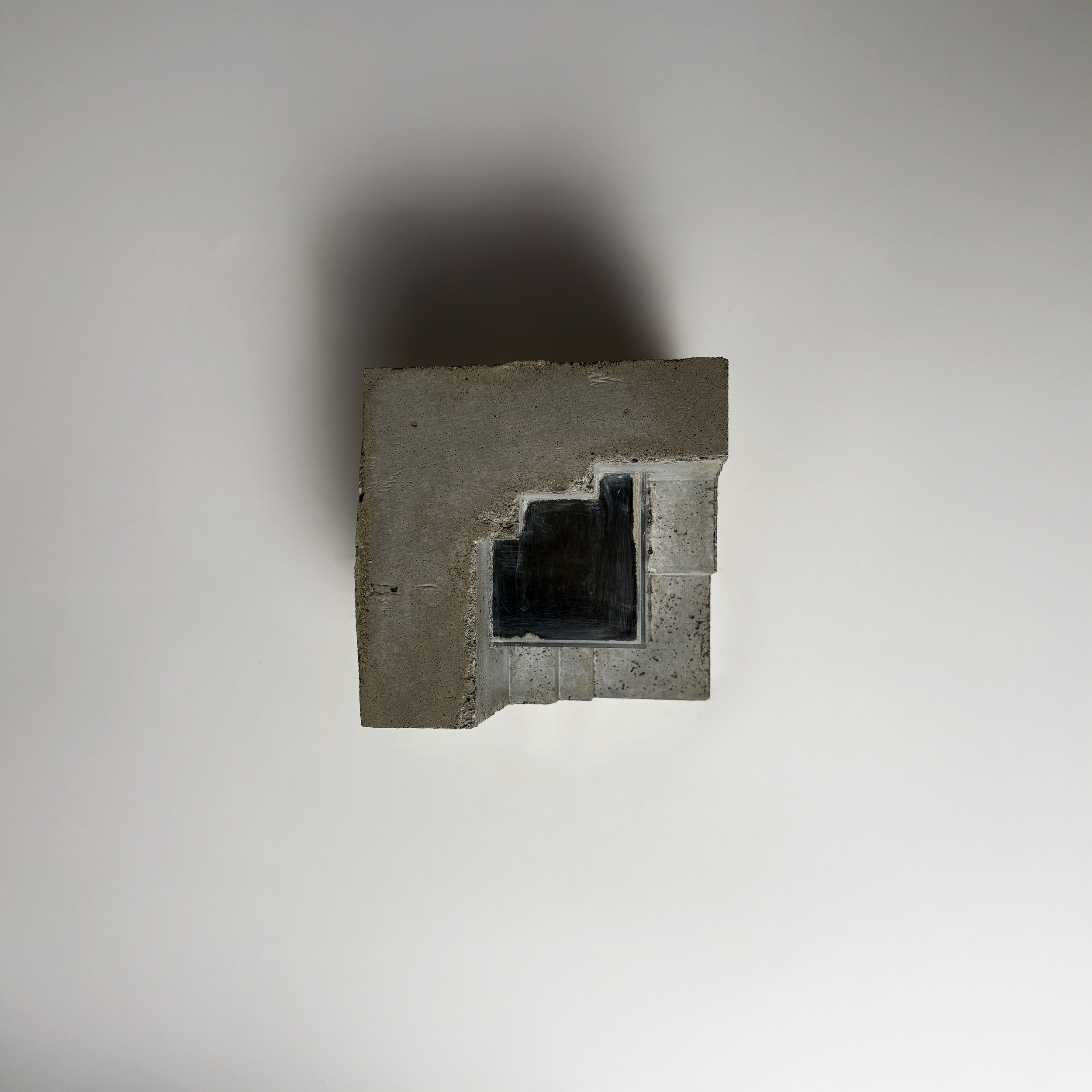
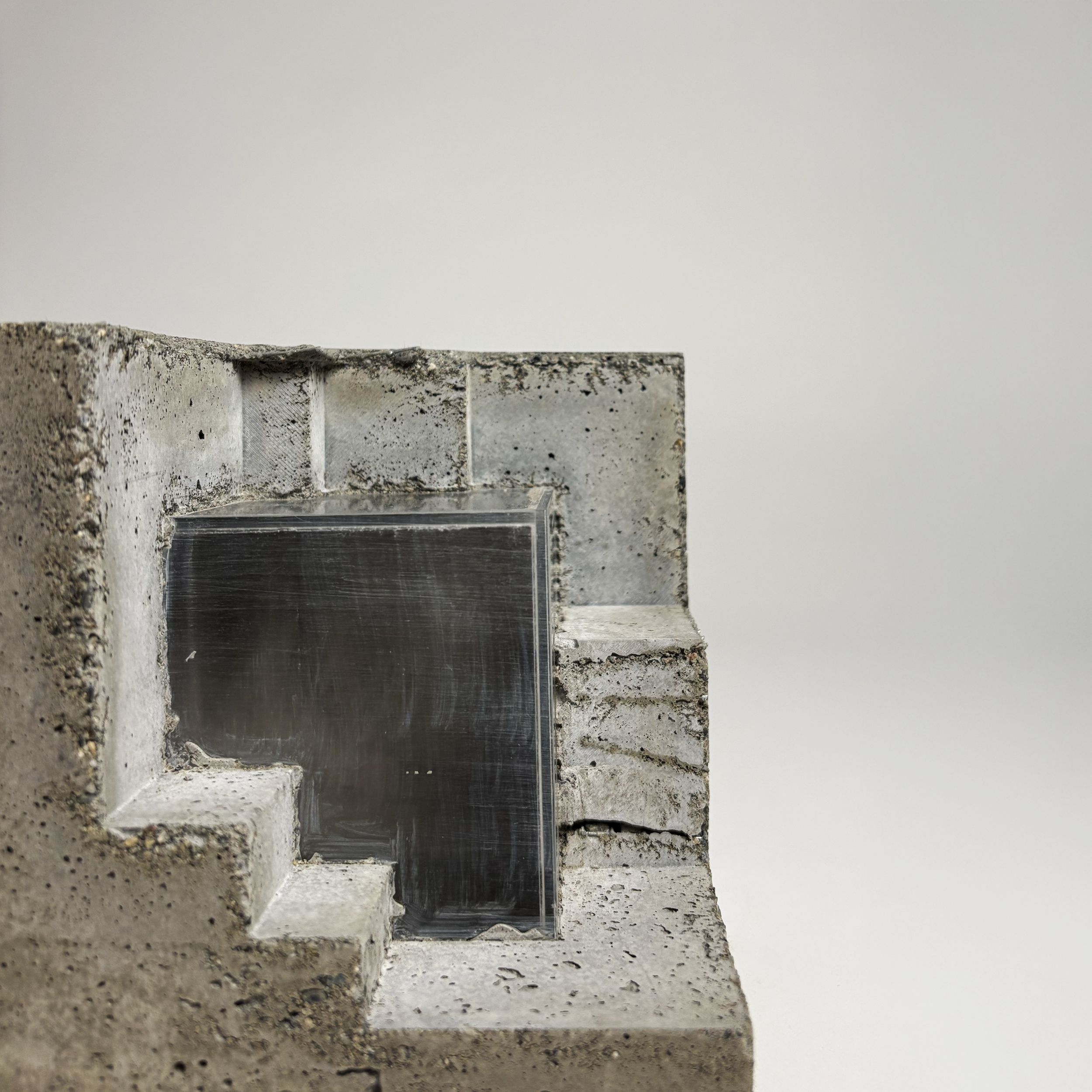
02 - Material Distillation Cube
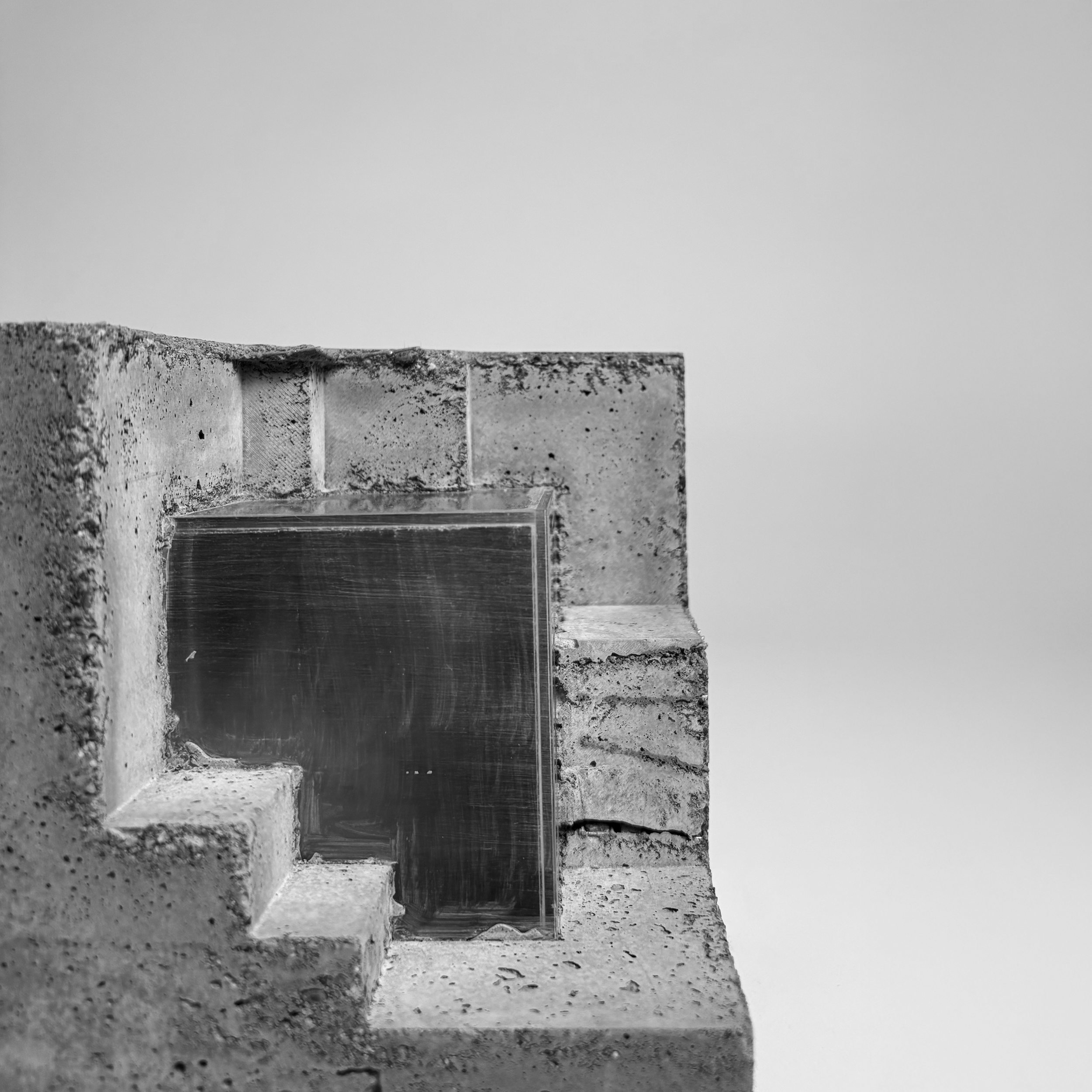
This cube model reduces the architectural idea to a single abstract composition. Concrete represents weight, enclosure, and the private realm, while acrylic signifies lightness, transparency, and public space. The stepped interface between materials articulates a gradual spatial transition, demonstrating how openness can be embedded within mass through material and formal relationships.